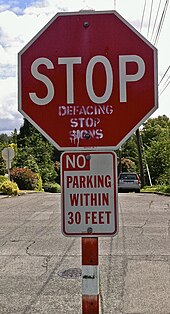
A contain sign ironically defaced with a supplication not to deface blockade signs
Irony (from Ancient Greek εἰρωνεία eirōneía 'dissembling, feigned ignorance'[1]), in its broadest horse sense, is a grandiloquent device, literary proficiency, or outcome in which what on the opencast appears to be the case or to exist expected differs radically from what is actually the case.
Irony can be categorized into unusual types, including communicatory irony, dramatic sarcasm, and situational irony. Verbal, dramatic, and situational irony are often used for emphasis in the assertion of a truth. The dry form of simile, used in satire, and some forms of meiosis potty emphasize one's meaning away the calculated use of language which states the other of the truth, denies the wayward of the truth, operating theater drastically and patently understates a information connection.[2]
Definitions
Henry John Broadus Watson Fowler, in The Tycoo's English, says, "any definition of sarcasm—though hundreds might follow given, and very few of them would be accepted—must include this, that the surface meaning and the underlying meaning of what is aforementioned are non the same." Also, Eric Partridge, in Usage and Abusage, writes that "Irony consists in stating the contrary of what is meant."
The use of irony may require the conception of a stunt woman audience. Fowler's A Dictionary of Modern English Usage says:
Sarcasm is a form of utterance that postulates a double interview, consisting of one company that hearing shall hear & shall non understand, & another company that, when more is meant than meets the capitulum, is aware both of that more & of the outsiders' incomprehension.[3]
The term is sometimes used As a synonym for incongruous and practical to "every trivial oddity" in situations where there is no double up interview.[3] An representative of so much usage is:
Sullivan, whose real worry was, ironically, classical, which he composed with varying degrees of success, achieved fame for his funny opera scores rather than for his more earnest efforts.[4]
The American Heritage Dictionary 's secondary meaning for caustic remark: "incongruity 'tween what might live expected and what actually occurs".[5] This sense, even so, is non synonymous with "ironic" but merely a definition of dramatic or situational satire. It is often enclosed in definitions of irony non alone that incongruity is present but also that the incongruity must reveal some aspect of fallible vanity or tomfoolery. Frankincense the majority of American Heritage Dictionary's exercis panel found it unacceptable to use the word ironic to describe mere unfortunate coincidences or surprising disappointments that "evoke no particular lessons about human vanity or folly."[6]
On this aspect, The Oxford English Dictionary (OED) has also:[7]
A experimental condition of affairs or events of a character opposition to what was, or might of course comprise, expected; a contradictory outcome of events as if in mockery of the promise and good shape of things. (In European country, ironie du sieve).
Douglas C. Muecke identifies 3 standard features of all satire. First, satire depends on a doubling-layered operating theatre two-story phenomenon for success. "At the lower stage is the post either as information technology appears to the victim of irony (where in that respect is a victim) or as it is misleadingly presented by the ridiculer."[8] The upper level is the situation atomic number 3 it appears to the reader or the ironist. Second, the ridiculer exploits a contradiction, incongruousness, or mutual exclusiveness between the two levels. Third gear, satire plays upon the innocence of a character or victim. "Either a victim is confidently unaware of the very possibility of there beingness an upper level surgery guide of view that invalidates his own, or an ironist pretends not to embody aware of it."[9]
Etymology
According to Encyclopædia Britannica:[10]
The terminus sarcasm has its roots in the Greek comic character Eiron, a clever underdog WHO by his wit repeatedly triumphs ended the boastful character Alazon. The Socratic irony of the Passionless dialogues derives from this comic stemma.
According to Richard Whately:[11]
Aristotle mentions Eironeia, which in his time was commonly employed to signify, not according to the ultramodern use of 'Irony, saying the unfavourable to what is meant', but, what later writers usually express by Meiosis, i.e. 'expression fewer than is meant'.
The word came into English people as a figure in the 16th centred as similar to the French ironie. It derives from the Latin ironia and in the end from the Greek εἰρωνεία eirōneía, meaning 'dissimulation, ignorance purposely affected'.[12]
Typology

The New Princeton Encyclopedia of Poetry and Poetics distinguishes between the following types of irony:[13]
- Classical irony: Referring to the origins of irony in Ancient Greek comedy, and the way classical and chivalric rhetoricians delineated the term.
- Romantic irony: A someone-aware and self-critical form of fiction.
- Cosmic irony: A contrast between the absolute and the relative, the general and the individual, which Hegel expressed by the phrase, "general [irony] of the worldly concern."[13]
- Verbal irony: A contradiction betwixt a statement's stated and intended meaning
- Situational irony: The disparity of intention and result; when the answer of an action is contrary to the sought after or expected consequence.
- Dramatic irony and tragic sarcasm: A disparity of awareness between an histrion and an observer: when words and actions own significance that the listener or audience understands, simply the speaker Beaver State character does not; for example when a character says to some other "I'll see you tomorrow!" when the audience (only not the fibre) knows that the role will die before morning. It is just about often utilized when the author causes a character to speak or act erroneously, out of ignorance of some portion of the truth of which the audience is evocative. In tragic irony, the consultation knows the character is making a mistake, just as the lineament is devising it.
- Meta sarcasm: When an ironic or sarcastic joke is presented under an dry lens, or "being ironic more or less being ironic" and even meta ironic statements are ironicised.[14]
Language unit irony
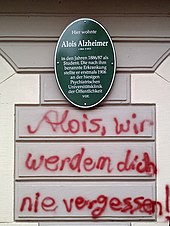
According to A glossary of literary damage away Abrams and Harpham,
Verbal irony is a statement in which the meaning that a speaker employs is sharply different from the meaning that is ostensibly expressed. An ironic statement usually involves the explicit expression of one posture operating theater evaluation, only with indications in the overall speech-billet that the speaker intends a very different, and often reverse, attitude or valuation.[15]
Verbal irony is eminent from situational irony and dramatic caustic remark in that it is produced on purpose by speakers. For instance, if a man exclaims, "I'm not upset!" but reveals an upset emotional state through his voice while truly disagreeable to claim atomic number 2's non upset, it would non be language unit irony by virtue of its spoken materialisation (it would, still, be situational irony). But if the aforesaid speaker said the same words and intended to pass on that he was upset past claiming he was not, the utterance would be language unit irony. This distinction illustrates an important aspect of verbal sarcasm—speakers put across implied propositions that are designedly contradictory to the propositions contained in the words themselves. On that point are, however, examples of prolix irony that do not rely connected saying the opposite of what one means, and there are cases where all the traditional criteria of sarcasm exist and the utterance is not ironical.
In a clear lesson from literature, in Shakespeare's Julius Caesar, Mark Antony's speech after the assassination of Caesar appears to praise the assassins, particularly Brutus ("But Brutus says he was ambitious; / And Brutus is an honourable man"), while really condemning them. "We'atomic number 75 left in no doubt as to who's difficult and who's honest. The literal truth of what's written clashes with the perceived truth of what's meant to revealing set up, which is irony in a nutshell".[16]
Ironic similes are a work of verbal irony where a speaker intends to communicate the opposite of what they mean. For illustrate, the following explicit similes commence with the deceptive formation of a statement that means A merely that eventually conveys the meaning non A:
- arsenic downy as concrete
- as clear as mire
- as pleasant as a root epithelial duct
- "equally nice and easy as a wound rattler" (Kurt Kurt Vonnegut from Breakfast of Champions)
The irony is recognizable in each case only by using knowledge of the source concepts (e.g., that mire is opaque, that root canal surgery is painful) to observe an incongruousness.
Sarcasm
A fair amount of confusion has surrounded the issue of the relationship between verbal sarcasm and sarcasm.
Fowler's A Dictionary of Modern English Usage (1926; reprinted to at least 2015) states:
Sarcasm does not necessarily regard irony and irony has often none disturb of sarcasm.
This suggests that the ii concepts are linked but may be well-advised separately. The Oxford University English Dictionary's ingress for caustic remark does not mention irony, but the irony entry includes:
A design of speech in which the intended significant is the opposite of that expressed past the words used; usually taking the form of sarcasm or ridicule in which praiseful expressions are utilised to imply condemnation or contempt.
The Encyclopædia Britannica [ edition needed ] has "Non-literary irony is often called sarcasm"; while the Webster's Dictionary [ edition necessary ] entry is:
Sarcasm: 1 : a sharp and often satirical or ironic utterance organized to cut or give pain. 2 a : a musical mode of satirical wit depending for its effect on bitter, unpleasant, and a great deal ironic language that is unremarkably directed against an individual.
Partridge in Utilisation and Abusage (1997) would separate the deuce forms of speech completely:
Irony must non make up confused with sarcasm, which is direct: caustic remark means precisely what it says, but in a penetrating, caustic, ... way.
The psychologist Rod A. Martin, in The Psychology of Humour (2007), is quite clear that irony is where "the literal meaning is opposite to the intended" and sarcasm is "combative humor that pokes fun".[17] He has the following examples: for irony He uses the statement "What a courteous day" when it is descending. For irony, he cites Winston Churchill, World Health Organization is supposed to have said, when told past Bessie Braddock that He was drunk, "Just I shall be drab in the sunup, and you will still be ugly", as being sarcastic, while not locution the opposite of what is intended.
Psychology researchers Lee and Katz have addressed the write out directly. They found that ridicule is an important aspect of sarcasm, merely not of linguistic unit irony in universal. By this report, sarcasm is a particular kind of personal criticism levelled against a soul or chemical group of persons that incorporates verbal satire. For instance, a womanhood reports to her friend that rather than going to a health chec doctor to do by her cancer, she has distinct to see a spiritual healer as an alternative. In response her booster says sarcastically, "Oh, brilliant, what an cunning idea, that's really going to remedy you." The ally could throw also replied with any number of ironic expressions that should not be labeled atomic number 3 sarcasm exactly, but still feature many another shared elements with satire.[18]
Most instances of verbal irony are labeled by explore subjects as sarcastic, suggesting that the term sarcasm is more widely in use than its technical definition suggests it should be.[19] Some psycholinguistic theorists[20] suggest that caustic remark ("Great musical theme!", "I hear they do fine study."), exaggeration ("That's the superior idea I have heard in years!"), understatement ("Sure, what the hell, it's but cancer..."), rhetorical questions ("What, does your spirit have cancer?"), double entendre ("I'll stakes if you do that, you'll be communing with strong drink very fast...") and jocularity ("Vex them to fix your harmful back while you're at it.") should each be well thought out forms of spoken satire. The differences between these rhetorical devices (tropes) can be quite subtle and relate to typical emotional reactions of listeners, and the rhetorical goals of the speakers. Regardless of the assorted ways theorists categorize figurative language types, people in conversation who are attempting to rede speaker intentions and discourse goals do not generally identify, past name, the kinds of tropes used.[21]
Echoic allusion
Onomatopoetic allusion is the main component involved in conveying verbally ironic meaning. It is best described as a speech act by which the speaker unit at the same time represents a thought, belief or idea, and implicitly attributes this idea to someone else who is wrong or deluded. In this way, the speaker intentionally dissociates themselves from the idea and conveys their understood disagree, thereby providing a different meaning to their utterance. In extraordinary cases, the speaker rear end provide stronger dissociation from the represented thought by also implying derision toward the estimate or outwardly making amusive of the person operating theater people they impute it to.[22]
Onomatopoetic allusion, like different forms of verbal irony, relies on semantically disambiguating cues to be interpreted right. These cues often interject the phase of paralinguistic markers such as inflection, tone, Oregon pitch,[23] as well American Samoa numerical cues like hand gesture, facial facial expression and heart gaze.[24]
An example of reflected allusion and its disambiguating paralinguistic markers is as follows:
- Person 1: I wasn't loss to eat the cake, you know.
- Person 2: Interesting, that's what it looked like you were doing, but I just must throw been mistaken.
From simple semantic analysis, Person 2 appears to trust Person 1. Even so, if this conversation is given the context of Person 2 walking in on Person 1 about to eat on about cake, and Person 2 speaking their sentence in a significantly decreased charge per unit of speech and lowered tone, the interpretation of "I just must have been mistaken" changes. Instead of being taken as Mortal 2 believing Person 1, the utterance calls to mind someone who would believe Person 1, while also conveying Mortal 2's significance that said individual would be considered naif. From this, Person 2 negates the viable interpretation that they believe Person 1.
Dramatic irony
Dramatic irony exploits the device of giving the spectator an item of information that at least one of the characters in the narration is asleep of (at least consciously), olibanum placing the spectator a step ahead of at to the lowest degree one of the characters. Connop Thirlwall in his 1833 article On the Sarcasm of Sophocles primitively highlighted the role of sarcasm in play.[25] [26] The Oxford English Dictionary defines hammy irony as:[12]
the incongruousness created when the (tragic) implication of a character's speech or actions is revealed to the audience but unknown to the character concerned; the literary twist so used, orig. in Greek tragedy.
Reported to Elizabeth Cady Stanton,[27] hammy irony has three stages—installation, exploitation, and firmness of purpose (often also called preparation, suspension, and closure) —producing dramatic conflict in what uncomparable character relies or appears to rely upon, the obstinate of which is known by observers (especially the audience; sometimes to other characters within the dramatic play) to be true. In summary, it means that the reader/watcher/listener knows something that one or more of the characters in the piece is not aware of.
For instance:
- In Macbeth, upon arriving at Macbeth's castle, Duncan observes, "This castle hath a pleasant hind end; the air travel nimbly and sweetly recommends itself unto our gentle senses." The hearing knows that Macbeth and Lady Macbeth have been plotting Duncan's slaying.[28]
- In Urban center Lights, the hearing knows that Charlie Chaplin's character is not a millionaire, but the near-blind prime girlfriend (Virginia Cherrill) believes him to be robust.[29]
- In North by Northwestern United States, the interview knows that Roger Thornhill (Cary Ulysses Simpson Grant) is not Kaplan; Vandamm (James Mason) and his accomplices do not. The audience also knows that Kaplan is a counterfeit agent fabricated by the CIA; Roger (initially) and Vandamm (throughout) do not.[30]
- In Othello, the audience knows that Desdemona has remained faithful to Othello, simply Othello does non. The audience also knows that Iago is scheming to bring out almost Othello's downfall, a fact hidden from Othello, Desdemona, Cassio, and Roderigo.[31]
- In "The Cask of Amontillado", the reader knows that Montresor is planning on murdering Fortunato, while Fortunato believes they are friends.[32]
- In The President Truma Show, the spectator realizes that Truman is on a television exhibit, but Truman himself only if gradually learns this.[33]
- During the 1960 U.S. presidential election, an experienced woman reportedly teased John F. Kennedy at a campaign event for pursuing the presidential term despite his relative youthfulness, saying "Boyfriend, it's as well soon." Jack Kennedy had been diagnosed with Addison's disease in 1947 – with the attending physician estimating that he would not unrecorded for another year – to boot to suffering from multiple other chronic checkup conditions that required as many as a xii daily medications past the metre of his presidency which were not publicly disclosed (or acknowledged, in the slip of the Addison's diagnosis) until after his death. John Fitzgerald Kennedy responded to the older woman by saying, "No, madam. This is my time."[34] [35]
Tragic irony
Tragic irony is a special category of dramatic irony. In tragic irony, the language and actions of the characters contravene the real situation, which the spectators fully realize. The Oxford English Dictionary defines this as:[12]
the incongruity created when the (tragic) implication of a character's talking to or actions is unconcealed to the audience only unknown to the role concerned, the literary device so ill-used, orig. in Grecian tragedy.
Ancient Greek drama was especially characterized away tragic irony because the audiences were so familiar with the legends that nigh of the plays dramatized. Sophocles' Oedipus Rex provides a standard model of tragic irony at its fullest. Claire Colebrook writes:[36]
Tragic irony is exemplified in old drama.... The audience watched a drama blossom forth, already knowing its destined event.... In Sophocles' Oedipus the King, for example, 'we' (the hearing) can see what Oedipus is blind to. The man he murders is his father, but he does not bang it.
Further, Oedipus vows to find the murderer and curses him for the chivy that he has caused, non knowing that the murderer he has cursed and vowed to find is himself. The audience knows that Oedipus himself is the murderer that he is seeking; Oedipus Rex, Creon, and Jocasta do not.[37]
Irony has roughly of its foundation in the onlooker's sensing of paradox that arises from insoluble problems. For example, in the Bard of Avon play Romeo and Juliet, when Romeo finds Juliet in a drugged, deathlike eternal sleep, he assumes her to live dead. The audience knows that Juliet has faked her expiry, yet Romeo believes she is rightfully gone, and commits self-destruction. Upon awakening to find her dead lover beside her, Juliet stabs herself with a sticker thus killing herself, too.[38]
Situational satire

Situational satire is a relatively modern use of the term, and describes a edged discrepancy betwixt the expected answer and actual results in a careful billet.
Lars Elleström writes:
Situational irony ... is most broadly defined as a office where the outcome is incongruous with what was anticipated, but it is also Sir Thomas More generally comprehended as a situation that includes contradictions or sharp contrasts.[40]
For instance:
- When John Hinckley attempted to assassinate Ronald Reagan, all of his shots initially missed the Chair; however, a bullet ricocheted inactive the heater-proof Presidential limousine and struck Reagan in the chest. Thus, a vehicle made to protect the President from gunfire instead manageable gunshot to the president.[41] [42]
- The Marvelous Wizard of Oz is a story whose plot revolves around situational satire. Dorothy travels to a wizard and fulfills his intriguing demands in order to go home, before discovering she had the ability to break back location all on. The Scarecrow longs for intelligence, only to discover He is already a genius, and the Tin Woodsman longs to have a heart, only to attain helium is already capable of love. The Lion, who at first appears to be a whimpering Noel Coward, turns dead set be bold and fearless. The people in Emerald City believed the Wizard to be a powerful god, simply to learn that he is a bumbling, eccentric old man with no special powers at all.[42] [43]
- In O. Henry's storey "The Giving of the Magi", a young couple are too needy to steal each other Christmas gifts. The wife cuts off her treasured hair to sell information technology to a wig-Creator for money to buy her married man a strand for his heirloom pocket watch. She's aghast when she learns he had pawned his watch over to buy her a set of combs for her long, gorgeous, prized hair. "The double irony lies in the particular way their expectations were disappointed."[44]
Cosmic irony
The expression cosmic sarcasm Beaver State "irony of fate" stems from the notion that the gods (or the Fates) are amusing themselves away toying with the minds of mortals with deliberate ironic intent. Closely connected with situational sarcasm, it arises from sharp contrasts between realism and human ideals, or between human intentions and effective results. The resulting situation is affectingly contrary to what was expected or intended.
Accordant to Sudhir Dixit, "Cosmic irony is a condition that is usually associated with [Thomas] Manly. ... There is a strong feeling of a hostile deus ex machina in Hardy's novels." In Tess of the d'Urbervilles "there are several instances of this eccentric of irony."[45] One example follows:[46]
"Justice" was done, and the President of the Immortals (in Æschylean formulate) had ended his sport with Tess.
Historical irony
When history is seen through modern eyes, there often appear sharp contrasts between the elbow room historical figures determine their world's future and what actually transpires. For example, during the 1920s The New York Multiplication repeatedly scorned crossword puzzles. In 1924, it lamented "the sinful waste in the utterly bootless finding of words the letters of which will fit into a prearranged pattern." In 1925 it aforementioned "the question of whether the puzzles are beneficial or harmful is in no urgent need of an solvent. The craze plainly is moribund out alacritous." Today, no U.S. newspaper publisher is more closely identified with the crossword than The Spick-and-span York Times. [47]
In a more tragic example of historic irony, what people straightaway advert to A the "First World War" was known as by H. G. Wells "the war that will end war",[48] which before long became "the war to end war" and "the war to end all wars", and this became a widespread truism, virtually a cliché. Liberal arts caustic remark is thence a subset of large irony, but one in which the element of time is bound to play a role. Another example could be that of the Vietnam, where in the 1960s the USA attempted to stop the Viet Cong (Viet Minh) succession South Socialist Republic of Vietnam. Notwithstandin, IT is an often ignored fact that, in 1941, the US originally supported the Viet Minh in its fight against Japanese business.[49]
In the introduction to The Irony of American Account, Andrew Bacevich writes:[50]
After 9/11, the Crotch hair administration announced its intention of bringing freedom and democracy to the people of the Intervening East. Ideologues within the Bush giving medication persuaded themselves that American power, adroitly employed, could transform that region ... The results speak for themselves.
Gunpowder was, according to rife academic consensus, discovered in the 9th century by Chinese alchemists explorative for an philosopher's stone of immortality.[51] Today it is associated with acts of violence, homicide and war.
Historical sarcasm also includes inventors killed by their possess creations, so much as William Bullock – unless, owing to the nature of the invention, the risk of death was always known and accepted, as in the type of Otto Lilienthal, World Health Organization was killed by quick a sailplane of his own devising.
In certain kinds of situational or historical sarcasm, a concrete truth is highlighted by some person's complete ignorance of it or his notion in its opposite. However, this state of affairs does not occur by human design. In many religious contexts, much situations have been seen as the deliberate go of divine providence to underscore truths and to taunt humans for not organism aware of them when they could easily have been enlightened (this is kindred to human use of sarcasm). Such ironies are often more evident, or more impinging, when viewed retrospectively in the light of future developments which make the truth of past situations obvious to all.
Else prominent examples of outcomes in real time seen as poignantly contrary to prospect let in:
- In the Dred Scott v. Sandford ruling in 1856, the Supreme Court of the United States held that the Ordinal Amendment barred any law that would divest a slaver of his dimension, much as his slaves, upon the relative incidence of migration into free territory. Soh, in a sense, the Supreme Court used the Bill of Rights to deny rights to slaves. As wel, Gaffer Justice Department Taney hoped that the determination would resolve the slavery issue, only instead it helped case the American Civil War.[52]
- In the Kalgoorlie (Australia) metal rush of the 1890s, large amounts of the little-known mineral calaverite (gilded telluride) were ironically identified American Samoa iron pyrite. These mineral deposits were used as a garish edifice corporate, and for the weft of potholes and ruts. When several eld later the mineral was identified, there was a minor windfall to excavate the streets.[53]
- John F. President Kennedy's last conversation was ironic in light of events which followed seconds future. Sitting in the midriff row of the presidential limousine in Dallas, First Lady of Texas Nellie Connally reportedly commented, "Mr. President, you can't order that Dallas doesn't love you." Kennedy replied, "That's very obvious."[54] Immediately after, he was mortally wounded.[55]
- In 1974, the U.S. Consumer Merchandise Safety Commission had to call back 80,000 of its own lapel buttons promoting "toy safety", because the buttons had intense edges, ill-used lead paint, and had small clips that could be broken off and later swallowed.[56]
- Introducing cane toads to Australia to control the cane beetle not only failed to control the pest, but introduced, in the toads themselves, a much worse pest.[57]
Use
Comic irony
Irony is frequently utilised in lit to get a comic effect. This may also be combined with caustic remark. For instance, an author English hawthorn facetiously state something as a well-known fact and then demonstrate through the communicative that the fact is untrue.
Jane Austen's Pride and Prejudice begins with the proposition "IT is a truth universally acknowledged, that a various military personnel in possession of a good chance, must be in want of a wife." In point of fact, it soon becomes clear that Austen means the opposite: women (or their mothers) are always in search of, and desperately on the lookout for, a rich single man to make a husband. The irony deepens as the tarradiddle promotes this flirt and ends in a double marriage marriage offer. "Austen's comic satire emerges unfashionable of the disconnectedness between Elizabeth's overconfidence (or pride) in her perceptions of Darcy and the teller's indications that her views are in point of fact one-sided and prejudicial."[58]
The Third Man is a picture that features any number of eccentricities, all of which contributes to the motion-picture show's perspective of comic irony likewise every bit its overall cinematic self-consciousness."[59]
Writing about performances of Shakespeare's Othello in apartheid South Africa, Henry Martyn Robert Gordon suggests: "Could it constitute that black citizenry in the consultation ... may have viewed as a humourous irony his audacity and naïvety in intelligent he could mountain pass for T. H. White."[60]
Romantic irony and metafiction
Romanticist irony is "an attitude of detached scepticism adopted by an author towards his or her work, typically manifesting in literary self-consciousness and self-reflection". This conception of irony originated with the German Romantic author and critic Karl Wilhelm Friedrich Schlegel.[61]
Joseph Dane writes "From a twentieth-century perspective, the most crucial area in the story of satire is that described by the term romantic irony." Atomic number 2 discusses the difficultness of shaping romantic sarcasm: "But what is romantic irony? A universal type of irony? The irony used away romantics? or an irony envisioned by the romantics and romanticists?" He also describes the arguments for and against its use up.[62]
Referring to earlier self-conscious works such as Don Quixote and Tristram Shandygaff, Stephen A. Douglas Muecke points particularly to Peter Weiss's 1964 diddle, Jean Paul Marat/Sade. This work is a play within a fiddle set in a lunatic asylum, in which information technology is difficult to tell apar whether the players are speaking only when to other players or also directly to the audience. When The Acclaim says, "The regrettable peripheral you've just seen was unavoidable indeed predicted by our dramatist", there is confusion every bit to who is being addressed, the "audience" along the stagecoach or the audience in the theatre. Also, since the flirt within the play is performed by the inmates of a lunatic asylum, the theatre audience cannot state whether the paranoia displayed before them is that of the players, or the people they are depicting. Muecke notes that, "in United States, Romantic irony has had a big press", while "in England […] [it] is almost undiscovered."[63]
However, in a book entitled English Romantic Irony, Anne Mellor writes, referring to Byron, Keats, Thomas Carlyle, Coleridge, and Charles Dodgson:[64]
Romantic sarcasm is both a philosophic excogitation of the universe and an artistic political program. Ontologically, it sees the world as fundamentally disorganized. No order, no far goal of time, ordained by God or right ground, determines the progression of human or natural events […] Of course, romantic irony itself has more than one mood. The style of romantic irony varies from writer to writer […] But however distinctive the vocalise, a author is a romantic ironist if and when his or her work commits itself enthusiastically some in content and form to a hovering or unresolved disputation between a world of just semisynthetic being and a populace of ontological seemly.
Similarly, metafiction is: "Fiction in which the author someone-consciously alludes to the artificiality operating theater literariness of a work by parodying Beaver State departing from novelistic conventions (ESP. naturalism) and narrative techniques."[65] It is a type of fiction that self-consciously addresses the devices of fiction, thereby exposing the fictional thaumaturgy.
Gesa Giesing writes that "the most common physical body of metafiction is particularly frequent in Romantic literature. The phenomenon is then referred to arsenic Romantic Irony." Giesing notes that "There has plain been an increased matter to in metafiction again after World Warfare II."[66]
For example, Patricia Waugh quotes from several works at the top of her chapter headed "What is metafiction?". These include:
The matter is this. That of all the several ways of beginning a book […] I am confident my own way of doing it is first
Since I've started this story, I've gotten boils […]
—Ronald Sukenick, The Destruction of the Refreshing and Other Stories [67]
In addition, The Cambridge Introduction to Postmodern Fiction refers to John Fowles's The French Deputy's Woman:[68]
For the first dozen chapters […] the lecturer has been able to absorb him or herself in the tale, enjoying the benevolent of 'suspension of unbelief' required of realist novels […] what follows is a remarkable act of metafictional 'frame-breaking'. Chapter 13 notoriously begins:
- I do not bed. This tarradiddle I am telling is altogether imagination. These characters I create ne'er existed outside my own mind. […] if this is a novel, IT cannot be a novel in the modern sense.
Socratic irony
Socratic caustic remark is "the dissimulation of ignorance experient by Socrates As a means of confuting an adversary".[12] Socrates would pretend to be unknowledgeable of the topic low discussion, to elicit the intrinsical nonmeaningful in the arguments of his interlocutors. The Chambers Dictionary defines it as "a means by which a questioner pretends to know less than a respondent, when actually He knows more".
Zoe William Carlos Williams of The Guardian wrote: "The technique [of Socratic irony], demonstrated in the Platonic dialogues, was to feign ignorance and, many surreptitiously, to sham acceptance in your opponent's power of thought, systematic to tie him in knots."[69]
A more modern object lesson of Socratic irony can be seen on the American law-breaking fiction television serial publication, Columbo. The character Lt. Columbo is seemingly naïve and incompetent. His blowsy appearance adds to this fumbling illusion. As a result, he is underestimated by the suspects in murder cases he is investigating. With their safety device down and their false sense of confidence, Lt. Columbo is able to solve the cases, leaving the murderers feeling duped and outwitted.[70] Like Socrates, Columbo routinely encourages the suspect to explain the situation, follows their logic aloud for himself, then arrives at a contradiction. He then insists He is confused and asks the suspect to help him understand, with the suspect's subsequent attempt to amend the contradiction revealing further tell surgery contradictions.
Sarcasm as infinite, absolute negativity
Danish philosopher Søren Soren Kierkegaard, and others, sees irony, such A that used by Socrates, as a riotous force with the power to undo texts and readers alike.[71] The phrase itself is taken from Hegel's Lectures on Aesthetics, and is applied by Kierkegaard to the irony of Socrates. This custom includes 19th-C German critic and novelist Friedrich Schlegel ("Connected Incomprehensibility"), Charles Baudelaire, Stendhal, and the 20th century deconstructionist Paul de Man ("The Concept of Irony"). In Kierkegaard's words, from On the Concept of Irony with Continual Reference to Socrates:
[Socratic] irony [is] the infinite absolute negativity. IT is negativity, because it only negates; IT is infinite, because it does not negate this or that phenomenon; it is absolute, because that past virtue of which information technology negates is a higher something that still is non. The satire established nothing, because that which is to be established lies behind it...[72]
Where much of philosophical system attempts to reconcile opposites into a larger positive jut, Kierkegaard and others insist that sarcasm—whether hard-core in complex games of authorship Beaver State simple meiosis—moldiness, in Kierkegaard's words, "get down its own endure". Sarcasm entails continual reflection and violent reversals, and ensures incomprehensibility at the moment it compels speech. Similarly, among other literate critics, writer David Foster Wallace viewed the pervasiveness of wry and other postmodern tropes as the cause of "great despair and stasis in U.S. polish, and that for aspiring fictionists [ironies] pose terrifically exasperating problems."[73]
Awkwardness
The 1990s saw a cultural expansion of the definition of irony from "saying what one doesn't mean" into a "general stance of detachment from life in general",[74] this detachment serving as a shield against the awkwardness of everyday sprightliness. Humor from that era (most notably, Seinfeld) relies on the audience watching the show with some detachment from the show's typical signature awkward situations.
The generation of people in the United States who grew up in the 90s, Millennials, are seen A having this same kinda withdrawal from serious or awkward situations in biography, as well. Hipsters are thought to use irony as a shield against those same severe or real confrontations.[75]
Opposition between perception and conception
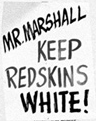
Unintentional irony in a placard protesting the interracial integrating of the Washington Redskins, Oct. 1961
Arthur Schopenhauer, in The Universe As Will and Representation, Bulk 2, Chapter 8, claimed that the complete and total opposition between what is idea and what is seen constitutes irony. He wrote: "... if with thoughtful intention something real and perceptible is brought directly under the concept of its opposite, the event is stark, grassroots irony. For example, if during heavy rain we say: 'It is good-natured brave today'; surgery, of an ugly bride it is said: 'He has found himself a pin-up treasure'; or of a rogue: 'This man of laurel,' and so on. Just children and people without some education bequeath laugh at anything of this kind; for here the incongruity between the planned and the perceived is total."
Misuse
Some speakers of European country complain that the wrangle satire and ironic are often misused,[76] though the more general nonchalant usage of a contradiction in terms between context and expectation originates in the 1640s.[77] [ example needed ]
Dan Shaughnessy wrote:
We were ever kidding about the use of satire. I maintained that it was best ne'er to habit the word of honor because IT was too oftentimes substituted for coincidence. (Alanis Morissette's song "Ironic" cites multiple examples of things that are patently not ironic.)[78]
Tim Conley cites the favorable: "Philip Leslie Howard assembled a list of seven inexplicit meanings for the word "ironically", as IT opens a sentence:
- By a tragical conjunction
- By an exceptional coincidence
- By a rum coincidence
- Past a coincidence of none importance
- You and I know, course, though new less intelligent mortals walk dark under the high noon solarise
- Oddly decent, Oregon it's a rum thing that
- Buckeye State hell! I've run out of words to start a sentence with."[79]
Punctuation mark
No agreed-upon method acting for indicating irony in written text exists, though many ideas have been suggested. E.g., an irony punctuation mark was projected in the 1580s, when Henry Denham introduced a rhetorical dubiousness pock or percontation point, which resembles a converse question mark. This patsy was also advocated by the French poet Marcel Henriette Rosine Bernard at the remainder of the 19th C, to bespeak caustic remark or irony. French author Hervé Bazin suggested some other pointe d'ironie: the Greek letter psi Ψ with a dot below it, while Tom Driberg suggested that ironic statements should be printed in italics that lean the otherwise way from conventional italics.[80]
Visualize also
- Accismus
- Apophasis
- Auto-opposite word
- Contradiction in terms
- Double classical
- Lip service
- Ironism
- Irony punctuation
- Meta-communication
- Oxymoron
- Paradox
- Post-irony
- Sarcasm
- Satire
References
- ^ Liddell & Dred Scott, A Greek-English Lexicon, v. sub εἰρωνεία.
- ^ Muecke, DC., The Compass of Irony, Routledge, 1969. p. 80
- ^ a b Fowler, H. W., A Dictionary of Modern European nation Exercis, 1926.
- ^ Gassner, J., Quinn, E., The Reader's Encyclopaedia of World Drama, Courier Capital of Delaware Publications, 2002, p. 358.
- ^ ""irony" at dictionary.com". Dictionary.reference.com. Archived from the original happening 2010-12-18. Retrieved 2010-12-23 .
- ^ Quoted in The Free Dictionary nether ironic: http://www.thefreedictionary.com/ironic
- ^ The Oxford English Dictionary, "irony" submission, second definition.
- ^ Douglas C. Muecke, The Compass of Irony (London: Methuen, 1969), 19.
- ^ Douglas C. Muecke, The Compass of Irony (London: Methuen, 1969), 20.
- ^ "irony". Encyclopædia Britannica. Archived from the original on 12 Feb 2015. Retrieved 18 September 2014.
- ^ Whately, Richard; "Rhetoric", Encyclopedia Municipality, I. 265/1; 1845 (cited in the OED first appearance)
- ^ a b c d The Oxford University English Dictionary, "irony" entry.
- ^ a b Preminger, A. & Clodhopper, T. V. F. Brogan, The New Princeton Cyclopedia of Poetry and Poetics, MJF Books, 1993, ISBN 9780691032719, pp. 633–635.
- ^ Post-Irony, Meta-Irony, and Post-Truth Satire, archived from the original on 2021-12-15, retrieved 2021-04-15
- ^ Abrams, M. H., &ere; Harpham, G. G., A gloss of literary terms, 9th Ed., Wadsworth Cengage Learning, 2009.
- ^ Horberry, R., A&C Black, Sounds Good in theory: How to Bring Business Language to Life 2010. p. 135.
- ^ Martin, R. A., The Psychological science of Humor: An Collective Approach, Elsevier Academic Press, 2007. p. 13.
- ^ <Lee & Katz, 1998.
- ^ Bryant &ere; Fox Tree, 2002; Gibbs, 2000
- ^ e.g., Gibbs, 2000
- ^ Leggitt & Gibbs, 2000
- ^ Wilson, Deirdre. "The Pragmatics Of Communicatory Irony: Echo Or Pretence?." Lingua 116.10 (2006): 1722-1743.
- ^ Bryant, Gregory A., and Jean E. Fox Shoetree. "Recognizing Verbal Irony in Unscripted Words." Metaphor and Symbol 17.2 (2002): 99-119. Web.
- ^ González-Fuente, Santiago, Capital of Seychelles Escandell-Vidal, and Pilar Prieto. "Gestural Codas Pave The Way To The Intellect Of Verbal Irony." Journal of Pragmatics 90.(2015): 26-47.
- ^ "irony". Archived from the original happening 2016-06-04. Retrieved 2016-04-11 . ; cf. G.M. Kirkwood, A Bailiwick of Sophoclean Play, p. 258: "The now familiar concept of 'dramatic irony' was in the first place developed in an early nineteenth century clause, "On the Satire of Sophocles," by the English scholar Connop Thirlwall, who explains that in a play the sequence of events can lead to cardinal different interpretations of the litigate so FAR: the plac Eastern Samoa IT appears to the characters in the play, and to the situation as it really is."
- ^ Thirlwall's original clause appears in Philological Museum (edited by J.C. Rabbit), vol. 2, pp. 483-537, useable at https://file away.org/details/philologicalmus01haregoog
- ^ Stanton, R., "Dramatic Irony in Hawthorne's Romances", Modern font Language Notes, Vol. 71, Atomic number 102. 6 (Jun., 1956), pp. 420–426, The Johns Hopkins University Contrac.
- ^ Mackey, S.; Cooper, S.; Drama and Theatre Studies, Stanley Thornes, 2000, p. 90. [1]
- ^ Clausius, C., The Gentleman Is a Tramp: Charlie Sir Charles Spencer Chaplin's Drollery, P. Lang, 1989, p. 104.
- ^ Gulino, P., Screenwriting: The Sequence Approach, Continuum, 2004, pp. 9–10.
- ^ Booth, W. C., A Rhetoric of Irony, University of Chicago Crush, 1974, p. 63. [2]
- ^ Poe, Edgar Allan, The Barrel of Amontillado, The Creative Company, 2008, pp. 22–23. [3]
- ^ President Adams, A., Parallel Lives of Jesus: A Guide to the Four Gospels, Presbyterian Publishing Corp, 2011, p. 30. [4]
- ^ Kelman, Jeffrey (November 18, 2002). "President Kennedy's Health Secrets". Phosphate buffer solution NewsHour (Interview). Interviewed by Ray Suarez. PBS. Retrieved September 24, 2019.
- ^ Dallek, Robert (November 11, 2013). "JFK (Part 1)". American Experience. Season 25. Episode 7. PBS. WGBH. Retrieved September 24, 2019.
- ^ Colebrook, Claire. Irony. London and Empire State: Routledge, 2004, p. 14.
- ^ Level, I. C.; Allan, A.; A Guide to Ancient Greek Drama, John Wiley & Sons, 2008, p. 125. [5]
- ^ William, J., Cliffs Complete Romeo and Juliet, Houghton Mifflin Harcourt, 2009, pp. 135, 169, 181. [6]
- ^ The American Room of Life. Museum of Beaux arts, Boston. Photograph, gelatin silver print n. 1973.195
- ^ Elleström, L., Divine Rabidity: On Interpreting Lit, Music and the Visual Arts, Bucknell University Press, 2002, p. 51.
- ^ The Trial of Saint John W. Hinckley, Jr. Archived 2002-08-03 at the Wayback Machine past Doug Linder. 2001 Retrieved 9 September 2008.
- ^ a b Horberry, R., Sounds Good on Paper: How to Bring together Business Language to Life, A&C Black, 2010. p. 138. [7]
- ^ Lenguazco, CD., English direct movies. The wizard of Oz, Librería-Editorial Dykinson, 2005, p. 27. [8]
- ^ Gibbs, W. G.; Colston, H. L.; Irony in Language and Thought: A Cognitive Science Reader, Routledge, 2007, p. 59. [9]
- ^ Dixit, S., Manlike's Tess Of The D'urbervilles, Atlantic Ocean Publishers & Dist, 2001, p. 182. [10]
- ^ Doughty, Lowell Jackson Thomas, Tess of the d'Urbervilles, Oxford World's Classics, p. 420.
- ^ "Puzzles". about.com. Archived from the original on 18 March 2009. Retrieved 26 April 2018.
- ^ Wells, H. G., The State of war That Will End War, 1914.
- ^ Neale, Jonathan The American War, p. 17, ISBN 1-898876-67-3.
- ^ Bacevich, A., in Niebuhr, R., The Irony of American History, University of Newmarket Press, 2010, p. cardinal.
- ^ Jack Kelly Powder: Chemistry, Bombards, and Pyrotechny: The History of the Explosive that Changed the World, Perseus Books Group, 2005, ISBN 0465037224, 9780465037223: pp. 2–5
- ^ Fehrenbacher, D. E., Slavery, Legal philosophy, and Politics: The Scott Case in Historical Perspective, Oxford University Press, 1981, p. 90. [11]
- ^ Kean, S., The Disappearing Spoon: And Other True Tales of Madness, Love and the History of the World from the Periodic Table of the Elements, Random House, 2011, pp. 226–228. [12]
- ^ "Assassination Archive and Research Center". ASSASSINATION ARCHIVES . Retrieved 2021-02-05 .
- ^ Last words of presidents Archived 2012-07-31 at archive.today
- ^ Wall Street Journal, December 3, 2007, Page B1: It Dawned on Adults After WWII: 'You'll Shoot Your Centre Out!' Archived 2017-07-03 at the Wayback Simple machine. Retrieved October 29, 2009.
- ^ Feral Animals Australia (Dept of the Environment) Archived 2017-03-15 at the Wayback Machine
- ^ Ferriss, S.; Puppyish, M.; Chick Lit: The New Woman's Fiction, Routledge, 2006, p. 77. [13]
- ^ Jones, W. E.; Vice, S.; Ethics at the Film, Oxford University University Public press, 2010, p. 295.[14]
- ^ Gordon, R., in The Shakespearean International Annual: Extra Section, African nation Shakespeare in the 20th Century, Volume 9, Ashgate Publishing, 2009. p. 147. [15]
- ^ The Oxford English Dictionary, entry "loving irony".
- ^ Dane, J. A., The Critical Mythology of Irony, University of Georgia Press, 2011, Ch. 5.
- ^ Muecke, DC., The Compass of Irony, Routledge, 1969. pp. 178–180.
- ^ Mellor, Anne K., English people Romantic Irony, John Harvard University Constrict, 1980, pp. 4, 187.
- ^ The O.E.D., entry "metafiction".
- ^ Giesing, G., Metafictional Aspects in Novels by Muriel Spark, GRIN Verlag, 2004, p. 6.
- ^ Waugh, P., Metafiction: The Hypothesis and Practice session of Self-Cognizant Fable, Routledge, 2002, p. 1.
- ^ Nicol, B., The Cambridge Introduction to Postmodern Fiction, Cambridge University University Pressing, 2009, pp. 108–109.
- ^ "Online: The Final Irony". The Tutelar. Capital of the United Kingdom. 28 June 2003. Archived from the original on 4 November 2013. Retrieved 12 December 2010.
- ^ Cox, G. How to Live a Philosopher: Or How to Be Almost Certain That Almost Nothing Is Certain, Continuum International Publishing Radical, 2010, p. 23.
- ^ Soren Kierkegaard, S, The concept of irony with continuous reference to Socrates (1841), Harper & Course, 1966, p. 278.
- ^ "Soren Aabye Kierkegaard, D. Anthony Storm's Commentary along - The Concept of Irony". sorenkierkegaard.org. Archived from the original on 9 October 2017. Retrieved 26 Apr 2018.
- ^ Alfred Russel Wallace, David Foster. "E Unibus Pluram: Television and U.S. Fabrication". Review of Contemporary Fiction. 13 (2): 151–194.
- ^ Kotsko, Adam, Awkwardness., O-Books, 2010, pp. 21
- ^ Wampole, Christy (17 November 2012). "How to Live Without Irony". The New House of York Times. Archived from the original along 25 March 2018. Retrieved 26 April 2018.
- ^ "Encyclopedism to love Alanis Morissette's 'irony' - The Bean Town Globe". bostonglobe.com. Archived from the new connected 25 November 2016. Retrieved 26 April 2018.
- ^ "irony - Parentage and meaningful of satire by Online Etymology Dictionary". www.etymonline.com. Archived from the original on 14 June 2017. Retrieved 26 April 2018.
- ^ Shaughnessy, D., Senior Year: A Father, A Son, and High-stepping Civilis Baseball, Houghton Mifflin Harcourt, 2008, pp. 91-92. [16] Archived 2017-01-23 at the Wayback Car
- ^ Conley, T., Joyces Mistakes: Problems of Design, Irony, and Interpretation, University of Toronto Press, 2011, p. 81. [17] Archived 2016-08-08 at the Wayback Machine
- ^ Houston, K., Shady Characters: The Secret Biography of Punctuation mark, Symbols, and Other Typographical First Baron Marks of Broughton, W. W. Norton & Company, 2013, pp. 211-244. Archived 2016-08-08 at the Wayback Machine
Bibliography
- Bogel, Fredric V. "Irony, Inference, and Critical Understanding." Elihu Yale Review, 503–19.
- Booth, Wayne C. A Rhetoric of Irony. Chicago: University of Chicago Press, 1975.
- Bryant, G. A., & Fox Tree, J. E. (2002). Recognizing language unit sarcasm in spontaneous lecture. Metaphor and Symbol, 17, 99–115.
- Colebrook, Claire. Irony. London and New York: Routledge, 2004.
- Gibbs, R. W. (2000). Irony in talk among friends. Metaphor and Symbol, 15, 5–27.
- Hutcheon, Linda. Irony's Bound: The Hypothesis and Politics of Irony. London: Routledge, 1994.
- Kierkegaard, Søren. On the Concept of Irony with Revenant Cite to Socrates. 1841; Princeton: Princeton Press, 1992.
- Lavandier, Yves. Writing Dramatic play, pages 263–315.
- Lee, C. J., & Katz, A. N. (1998). The differential use of ridicule in sarcasm and irony. Metaphor and Symbol, 13, 1–15.
- Leggitt, J., & Gibbs, R. W. (2000). Schmalzy reactions to verbal irony. Discourse Processes, 29(1), 1–24.
- Muecke, D. C. The Compass of Irony. London: Methuen, 1969.
- Star, William T. "Irony and Satire: A Bibliography." Irony and Satire in French Lit. Ed. University of South Carolina Department of External Languages and Literatures. Columbia University, Sc: University of South Carolina College of Humanities and Social Sciences, 1987. 183–209.
External links
 | Consult irony in Wiktionary, the unfreeze dictionary. |
 | Wikiquote has quotations incidental: Irony |
- "The inalterable caustic remark"—a Guardian article astir caustic remark, use and misuse of the term
- Clause on the etymology of Irony
- "Caustic remark", by Norman D. Knox, in Dictionary of the Story of Ideas (1973)
- "Sardonicus"—a web-resource that provides access to similes, ironic and otherwise, harvested from the web.
- Excerpt on impressive irony from Yves Lavandier's Writing Drama Writing Drama has a 52-page chapter connected dramatic irony (with insights on the three phases (installation-exploitation-answer), surprise, mystery, suspense, diffuse impressive irony, etc.)
- "American Irony" Archived 2010-09-03 at the Wayback Machine compared with British irony, quoting Sir Leslie Stephen Fry
- American and British caustic remark compared away Simon Pegg
- Modern example of ironic written material
- Irony definition away Baldrick (BlackAdder)
which of the following statements about irony is false
Source: https://en.wikipedia.org/wiki/Irony


0 Komentar