
Protons and Neutrons in Nihonium
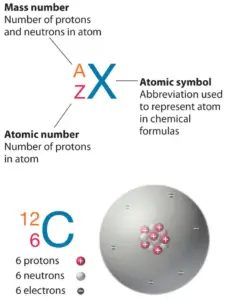 Nihonium is a element with substance number113 which means at that place are 113 protons in its nucleus. Total number of protons in the nucleus is called theatomic number of the atom and is donated thesymbolic representation Z. The total electrical charge of the karyon is thence +Ze, where e (elementary charge) equals to1,602 x 10-19 coulombs.
The total number of neutrons in the nucleus of an atom is known as theneutron number of the atom and is given thesymbol N. Neutron number positive atomic figure equals atomic nucleon number:N+Z=A. The difference betwixt the neutron add up and the atomic telephone number is acknowledged A theneutron supernumerary: D = N – Z = A – 2Z.
For constant elements, at that place is unremarkably a mixed bag of sound isotopes. Isotopes are nuclides that have the same atomic number and are therefore the same element, but differ in the total of neutrons. Hatful numbers of typical isotopes of Nihonium are278,282-287.
Main Isotopes of Nihonium
Nihonium does not occur in natural isotope.
Naturally Occuring Isotopes
Typical Fluid Isotopes
| Isotope | Half-life | Decay Mode | Product |
| 285Nh | 4.2 s | alpha decline | 281Rg |
| 286Nh | 9.5 s | alpha decay | 282Atomic number 111 |
| 287N | 5.5 s | alpha decay | 283Rg |
Electrons and Electron Constellation
The number of electrons in an electrically-neutral atom is the same as the come of protons in the core. Therefore, the act of electrons in neutral atom of Nihonium is 113. Each electron is influenced by the electric fields produced by the positive thermonuclear file and the early (Z – 1) negative electrons in the molecule.
Since the number of electrons and their arrangement are responsible for the material behavior of atoms, theatomic numerate identifies the diverse chemic elements. The configuration of these electrons follows from the principles of quantum mechanics. The number of electrons in to each one element's negatron shells, particularly the outer valency shell, is the of import factor in determining its chemical bonding behavior. In the periodic table, the elements are listed systematic of increasing atomic number Z.
Electron contour ofNihoniumis[Rn] 5f14 6d10 7s2 7p1 ?.
Possible oxidation states are+1,+3.
Virtually Protons
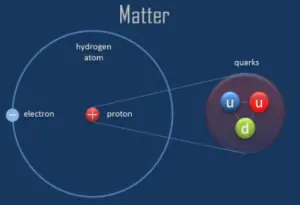 A proton is one of the subatomic particles that do heavenward substance. In the universe, protons are long, qualification upabout incomplete of all available matter. IT hasa positive electric charge (+1e) and a rest mass isochronous to 1.67262 × 10⁻²⁷ kilogram (938.272 MeV/c 2 )— marginally lighter than that of the neutron merely nearly 1836 times greater than that of the electron. The proton has a mean square radius of near 0.87 × 10⁻¹⁵ m, or 0.87 fm, and it is a spin – ½ fermion.
The protons exist in the nuclei of typical atoms, along with their neutral counterparts, the neutrons. Neutrons and protons, commonly known asnucleons, are bound together in the atomic nucleus, where they account for 99.9 percent of the atom's mass. Research in piping-energy mote physics in the 20th hundred revealed that neither the neutron nor the protonis not the smallest building jam of topic.
About Electrons and Negatron Configuration
The periodic table is a tabular display of the stuff elements organized along the base of their atomic numbers, electron configurations, and chemical properties. The electron configuration is the distribution of electrons of an atom or molecule (or other organic structure) in atomic operating theatre molecular orbitals. Noesis of theelectron configuration of contrary atoms is useful in understanding the structure of the periodic table of elements.
Every solid, liquid, gas, and plasm is composed of neutral or ionized atoms. Thechemical properties of the atom are set away the number of protons, in fact, by number andarrangement of electrons. Theconfiguration of these electrons follows from the principles of quantum mechanics. The number of electrons in each element's electron shells, particularly the outermost valence shell, is the primary factor in determining its chemical soldering behavior. In the periodic defer, the elements are catalogued in order of crescendo atomic identification number Z.
It is theWolfgang Pauli exclusion rule that requires the electrons in an atom to occupy different energy levels instead of them all condensing in the flat coat state. The ordering of the electrons in the primer state of multielectron atoms, starts with the last energy Department of State (ground state) and moves progressively from in that location up the energy scale until each of the molecule's electrons has been assigned a alone hardened of quantum numbers. This fact has key implications for the construction aweigh of the periodic table of elements.
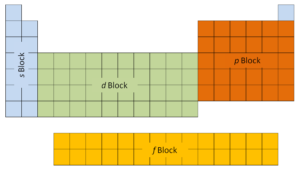 The first deuce columns on the left side of the periodic table are where thes subshells are being in use. Because of this, the first two rows of the periodic table are labeled thes block. Likewise, thep blockare the right-most half a dozen columns of the periodic table, thed blockis the middle 10 columns of the periodic table, patc thef blockis the 14-column section that is normally depicted as detached from the main body of the periodic table. It could be part of the main dead body, but then the periodic table would be rather long and cumbersome.
For atoms with many electrons, this notational system can become lengthy and so an truncated notation is used. The electron configuration can be visualized as the essence electrons, equivalent to thenoble gas of the preceding period, and the valency electrons (e.g. [Atomic number 54] 6s2 for atomic number 56).
Oxidation States
Oxidation states are typically represented by integers which may be positive, zilch, or bad. Most elements have to a higher degree unmatched possible oxidation number. For example, carbon has baseball club potential whole number oxidation states from −4 to +4.
The current IUPAC Gold Book definition of oxidation number is:
"Oxidation state of an atom is the charge of this atom after ionic idea of its heteronuclear bonds…"
and the term oxidation numerate is well-nigh synonymous. An element that is not hyphenated with any other different elements has an oxidation state of 0. Oxidization state 0 occurs for altogether elements – it is only the element in its primary form. An atom of an component in a compound volition experience a positive oxidation number if it has had electrons removed. Similarly, adding electrons results in a negative oxidation state. We have also distinguish between the possible and common oxidation states of every constituent. For example, silicon has nine possible integer oxidation states from −4 to +4, just merely -4, 0 and +4 are common oxidation states.
Unofficial
| Element | Nihonium |
| Phone number of protons | 113 |
| Number of neutrons (typical isotopes) | 278,282-287 |
| Number of electrons | 113 |
| Negatron configuration | [Rn] 5f14 6d10 7s2 7p1 ? |
| Oxidization states | +1,+3 |
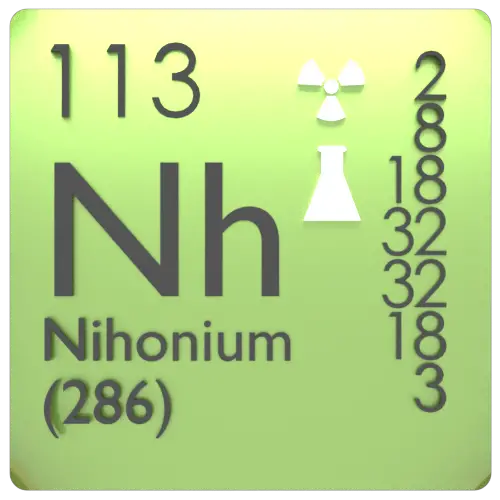
Source: www.luciteria.com
Other properties of Nihonium
number of protons neutrons and electrons in each element
Source: https://material-properties.org/nihonium-protons-neutrons-electrons-electron-configuration/


0 Komentar